
In the current calendar year, small and medium enterprises (SMEs) have witnessed an impressive surge in initial public offerings (IPOs), surpassing the 2018 record. Over 150 SME IPOs have been introduced to the market, breaking the previous record of 141 set in 2018. According to data from PRIME Database, a primary market tracking firm, 147 companies successfully concluded their debut share sales by the end of October, raising a cumulative Rs 3,727 crore.

South Korean auto giant Hyundai Motor Company is considering tax implications of listing its Indian unit before taking a final call, according to sources privy to the development. Hyundai Motor is mulling an initial public offering (IPO) for its Indian arm to raise around $3 billion (at a valuation of up to $30 billion), and talks are in the early stages between the company and bankers, banking sources revealed. Hyundai Motor India Ltd (HMIL), however, declined to comment on the development.

Infrastructure Investment Trusts need to be listed on stock exchanges besides being subject to stringent disclosure norms including detailed provisions for related party transactions and valuation of assets.

The Securities and Exchange Board of India (Sebi) has asked fund houses operating smallcap funds with a large corpus to share data on their holdings in the total free float of smallcap stocks, according to sources. This is part of the stress tests that the regulator wants fund houses to undertake amid a surge in inflows into smallcap schemes and growing concerns about valuations. Free float refers to the quantum of freely available shares for trading on the stock market.

Stories are legion about the Karatmeter's use at that time. Hundreds of people standing in queue for testing, customers breaking down after discovering the actual purity of their jewellery and then becoming irate about the jeweller who had gypped them, the local jewellery industry leaning heavily on the Tanishq franchisees to desist from using it, some jewellers even threatening violent action.

Sebi also plans to examine if any comments made by company officials or the bankers could have misled investors.

Members of Parliament, state legislatures, and local governments not eligible to be members of PSB boards
At present, the EPFO is mandated to invest 20-45 per cent of its incremental funds - of around Rs 1.5 trillion - in debt-related instruments.

Asia Securities Industry & Financial Markets Association (Asifma) has raised concerns about the Securities and Exchange Board of India (Sebi) proposal to introduce a T+0 settlement cycle. The industry association of top foreign portfolio investors (FPIs) has stated that this move could give rise to several issues, including the bifurcation of the market, liquidity fragmentation, and deterioration of market quality. In a discussion paper floated last month, Sebi has proposed a separate same-day settlement cycle that will run parallel to the existing T+1 cycle, where trades are settled the next day.

'The meanness of the board statement apart, it nowhere answers the most fundamental and damaging aspects of the deteriorating work culture among top company executives to which Narayana Murthy had been repeatedly drawing attention,' says B S Raghavan, the distinguished civil servant.
In the context of market integrity, the IRAI and RBI should go over the minutes of the LIC and SBI board meetings when the decisions to invest in Adani equity or debt were taken, notes Jaimini Bhagwati, former World Bank treasury professional.

The self-employed should invest in the National Pension System, a government-backed, low-cost retirement avenue where they can choose the mix of debt and equity that is right for them.
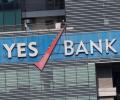
The regulatory actions, undertaken by the RBI and the government, came hours after finance ministry sources confirmed that SBI was directed to bail out the troubled lender. For the next month, Yes Bank will led by the RBI-appointed administrator Prashant Kumar, an ex-chief financial officer of SBI.

'Allocate some parts of one's surplus income towards cryptocurrencies, considering the immense growth potential of this emerging asset class.'

Pulbic banks have no reason to cheer Budget announcement.

Flipkart is in expansion mode, needs to infuse funds in the firm.

This issue was discussed at the Gyan Sangam addressed by Prime Minister.

Companies, which missed out on listing earlier, are giving it another shot but with significantly-reduced issue sizes. In the recent past, companies such as TVS Supply Chain Solutions, Suraj Estate Developers, and ESAF Small Finance Bank have re-filed their draft red herring prospectuses (DRHPs) with the Securities and Exchange Board of India (Sebi). This came after they slashed their issue sizes by 20-60 per cent.

Issues Rs 358 crore interim dividend, 1:10 bonus and 10:1 split
Tata Sons Private Limited, the holding company of the Tata group, witnessed a precipitous drop in its net debt to Rs 5,656 crore in the 10 months ended January this year, as its cash reserves burgeoned to Rs 9,516 crore during this period. Eight years ago, in 2015-16, Tata Sons reported a net debt of Rs 5,132 crore; from March 2017 until March 2023, this figure was above the Rs 14,700 mark, peaking at Rs 27,437 crore at the end of March 2019, according to data sourced from Capitaline. The company's gross debt nearly halved to Rs 15,173 crore until January 2024 on a standalone basis, down from a peak of Rs 31,363 crore reported in the financial year ended March 2019.

In a public notice, the Securities and Exchange Board of India observed that some companies or entities are illegally mobilising funds from the public by making false promises of exorbitant rates of return under various schemes.

Why are DIIs holding such a high stake in Zee, which is beset with alleged governance issues? Perhaps they think Zee is a deep-value stock, observes Debashis Basu.

It will be headed by Secretary, Department of Financial Services.

The Punjab chief minister said he was asked by Kejriwal to visit different places for campaigning for INDIA bloc candidates.

Domestic mutual funds (MFs) have underpinned demand for most public floats this year, dominated by small- and mid-sized initial public offerings (IPOs). Of the 24 IPOs that have hit the market so far this financial year (2023-24, or FY24), MFs have played the role of 'anchor investors' in 20. They have subscribed to over 40 per cent, or Rs 2,850 crore, worth of shares of the Rs 6,900 crore on offer in the anchor category, according to data provided by PRIME Database, a firm that tracks primary market data.

There was no smooth surge in middle class prosperity for foreign businesses to tap into because of the Indian economy was mismanaged, argues Debashis Basu.
The initial public offerings (IPOs) by small and medium enterprises (SMEs) hit a new high in 2023-2024 (FY24). In this financial year, data from the Prime Database showed that 190 companies raised Rs 5,579 crore through the SME IPO route. This financial year's tally bettered the fundraising in the previous financial year when 125 companies raised Rs 2,235 crore.

Rs 7 lakh crore will be invested to develop for over 80,000 km of highways including Bharatmala project in the next five years

Even investors with sums as low as Rs 1,000 per month can start their investment journey.

The Securities Appellate Tribunal (SAT) has set aside capital markets regulator Sebi's order that imposed a penalty of Rs 5.25 crore on Cairn India for making a misleading announcement regarding buyback of shares in 2014. Cairn India, which was merged with Vedanta Ltd in 2017, was accused of making a misleading public announcement designed to influence investors' decisions. "We hold that the violations of provisions of... the Prohibition of Fraudulent and Unfair Trade Practices (PFUTP) Regulations and... the Buyback Regulations are not proved against the company (Vedanta)," a bench consisting of Justice Tarun Agarwala and presiding officer Meera Swarup said.

The NSE held 25 to 100 per cent stakes in these entities through its subsidiary NSE Investments as of September.

The labour ministry has notified the more flexible investment pattern of 2008 for the Employees Provident Fund Organisation (EPFO), but minus its provision for investment in equity.

'What's sad today is that there are so many people who cannot find work, not because the country is devoid of that opportunity, but because we are not doing enough in the country.'

Are faulty design, hurried construction and private ownership to be blamed for the incidents of airport roofs crashing?

'I think some of us, like Mukesh Ambani, myself and those of us who head industrial units, ought to really focus on what we can really do to make the world a safer place, maybe 50 or 100 years from now.' 'For instance, how can we deal with climate change and global warming, right now?' 'The effects of it may not be felt now; in fact, we may pay a price for it today, but it will help the generations to follow.'

The size of Reserve Bank's balance sheet increased by 11.08 per cent to Rs 70.47 lakh crore as on March 2024, leading to the highest-ever dividend payout to the government, according to the central bank's annual report. In actual terms, the increase was Rs 7,02,946.97 crore over Rs 63.45 lakh crore as on March 2023.
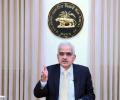
The challenge for the RBI in 2024 is likely to be less about containing elevated inflation and more about curbing excessive financial market exuberance and a 'problem of plenty', notes Sajjid Chinoy, Chief India Economist JP Morgan.

The special privileges granted to private equity (PE) investors by listed companies are set to go through shareholders' test. Under new rules introduced by the Securities and Exchange Board of India (Sebi), all such arrangements will require shareholders' nod by way of special resolutions. Legal experts say arrangements that are unfair to other public shareholders may not pass the muster.

The board is likely to take up the matter this month.

A new regulation concerning the disclosure of family arrangements by listed companies is exacerbating rifts between feuding shareholders. The latest example is Bengaluru-based TD Power Systems (TDPS), currently enmeshed in a legal dispute before the Karnataka high court over ownership of its 16 per cent equity. Vijay Kirloskar, who is asserting a claim over the 16 per cent stake held by Mohib Khericha (chairperson of TDPS) and Nikhil Kumar (managing director of TDPS and nephew of Kirloskar), has sent a letter to the market regulator, Securities and Exchange Board of India (Sebi), and stock exchanges. He accuses TDPS of insufficient disclosure concerning shareholder agreements.
